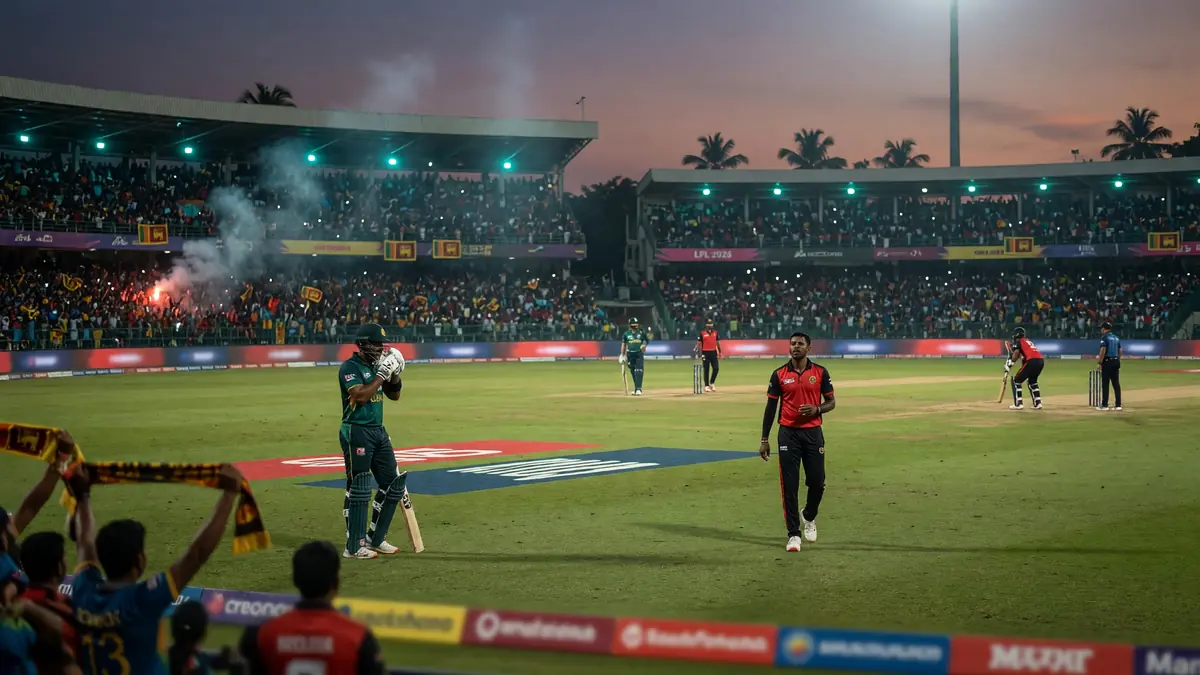
Jaffna Kings and Colombo Kaps meet in Lanka Premier League 2026 on Wednesday, 22 July, in the first leg of a Dambulla double-header. The fixture is scheduled for 3:00 PM Indian Standard Time (9:30 AM GMT) at Rangiri Dambulla International Stadium. For fantasy managers building small-league and mega-contest sides, the game is less about brand names and more about how a spin-friendly surface interacts with two teams that have already shown they can lose badly and bounce back within 48 hours.
Reporting compiled from match-week briefing material published by Khel Now notes that the Kings opened the season with a 36-run loss to Galle Gallants, then answered with a five-wicket win over Dambulla Sixers. Colombo Kaps followed a similar path: an opening defeat, then a recovery win. Both sides therefore enter this contest with one result either side of the ledger and a clear incentive to climb toward the top two. That shared urgency shapes fantasy risk—expect aggressive middle overs and fewer dead-rubber bowling changes than early group games sometimes produce.
Why this LPL meeting matters on a midweek slate
Midweek LPL contests compress research time. Managers who treat every “vs” tag the same way usually overpay for openers who thrived on true batting tracks and underweight slow bowlers who become the real ceiling plays once the ball softens. Dambulla’s recent LPL character—as described in the same pre-match notes—favours grip for spinners in the later stages, early seam movement with the new ball, and bounce that can turn uneven. Chasing is framed as the more comfortable route when conditions hold. Those three sentences alone should reorder a salary sheet before any famous batter is locked in as captain.
Head-to-head history also sits quietly in the background rather than as a headline. Across 11 previous meetings between these franchises, Jaffna lead 7–4. Historical edges are not automatic fantasy locks, but they do explain why projected win models and public captaincy often lean Kings when the squads look even on paper. Use that bias: if public ownership clusters on one or two Jaffna all-rounders, Colombo differential bowling can still decide rank in large fields.
For continuous fantasy platform releases, match-ops notes and slate round-ups, keep an eye on our latest cricket news as toss windows open across the week.
Form snapshot: recovery wins, not settled line-ups
Neither side has looked like a finished product. Jaffna’s first-up thrashing by Galle exposed a top order that can stall when early wickets fall; the five-wicket reply against Dambulla Sixers restored confidence without proving the batting is suddenly watertight. Colombo’s mirrored arc—loss, then win—means their middle-order finishing and death bowling still need a clean 20-over proof against a peer contender.
Fantasy consequence: avoid building entire teams as if either franchise is in free-flow batting form. Prefer players whose roles survive a first-over wicket—finishing all-rounders, second-change spinners, and keepers who bat in the top four. Pure top-order stacks from one side only are fragile when both teams are still sorting combinations.
Conditions over reputation: Dambulla’s fantasy physics
The pre-match weather outlook for Wednesday afternoon in Dambulla points to partly cloudy skies, a high near 34°C and average humidity around 47 percent. Heat alone rarely cancels cricket here, but it does stress fielders and can shorten spells for fast bowlers who open both innings. Humidity in the mid-40s is not a swing factory; seamers must earn early wickets with bounce and accuracy rather than extravagant movement.
Pitch notes from the briefing are more decisive than the sky. Slow bowlers are expected to find grip; spinners should extract turn as the innings ages; the new ball may offer more seam and uneven bounce that complicates stroke play. If those hold, the fantasy hierarchy tilts toward:
- Frontline spinners who bowl middle overs and can return at the death if match-ups allow
- All-rounders who combine a batting role with at least two or three overs of spin or medium pace
- Batters comfortable sweeping, using the crease and rotating strike when the ball stops
- Fewer automatic four-over pace bags unless a seamer has clear new-ball wicket history at this ground
Chasing preference, if the toss allows, also nudges keeper-batters and top-order anchors who see the full innings. Set-total openers remain viable, but their ceiling often depends on whether powerplay fields stay up and whether spin arrives as early as the fifth or sixth over.
Captaincy and core roles worth building around
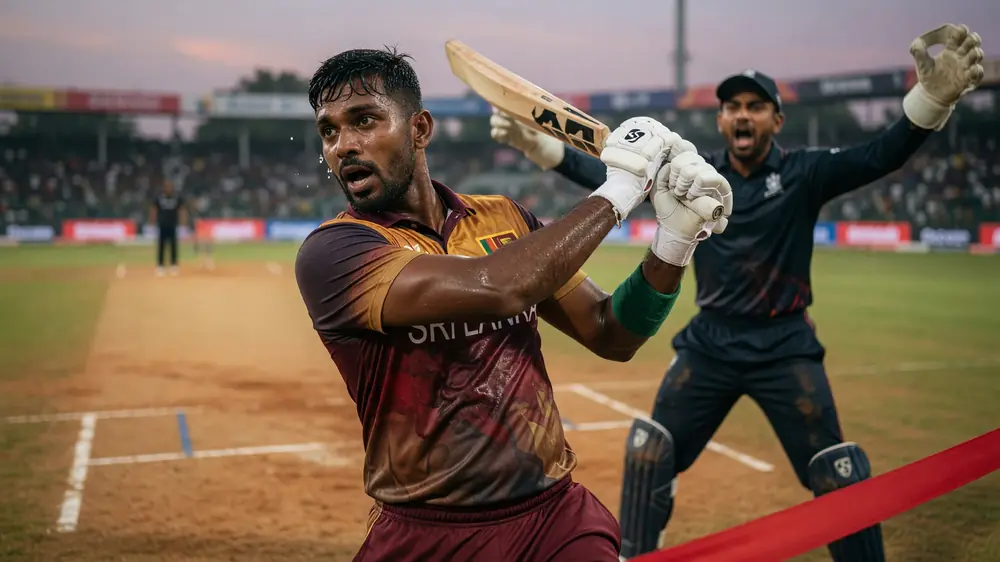
Public fantasy discussion around this fixture has clustered on a familiar set of multi-skill names. Dunith Wellalage sits near the centre of many projected sides: left-arm spin plus a middle-order bat makes him structurally suited to a surface that may slow. Janith Liyanage offers a similar two-way profile from the Colombo group and appears frequently as a vice-captain alternative when managers want exposure to the Kaps batting spine without full captaincy volatility.
Kusal Mendis, listed in briefings as Colombo’s captain and wicketkeeper, is the high-ownership anchor many will refuse to fade. Keeper points, top-order access and leadership minutes usually keep his floor respectable even when strike rate dips. Against that popularity, Jaffna’s Avishka Fernando remains the clearest batting ceiling if the new ball comes on for the first six overs. Paying up for both Mendis and Fernando is common; pairing one of them with a spin-bowling all-rounder often builds a more balanced core than stacking three pure batters.
James Neesham’s all-round brief for Colombo and David Wiese’s finishing-plus-seam role for Jaffna are the classic “if they bowl full overs” levers. Confirm overs at the toss before promoting either to captain in small leagues. In mega contests, one of them as a single differential C/VC is more disciplined than hoping both deliver simultaneous ceiling games.
Suggested role map (not a locked XI)
- High-ownership spine: Kusal Mendis; one of Avishka Fernando or a second Colombo top-order bat; Dunith Wellalage
- Balanced glue: Janith Liyanage or Kamindu Mendis; James Neesham if overs are likely
- Bowling levers: Piyush Chawla’s leg-spin for Jaffna; Lizaad Williams with the new ball; Colombo options such as Mujeeb Ur Rahman or Hasan Mahmud depending on final XI
- Salary saves / upside: Wanuja Sahan or other young spin if named; Chamindu Wickramasinghe only when his batting slot is secure
Briefings also float names such as Ibrahim Zadran and Ben McDermott in sample fantasy combinations even when they are not locked into every predicted XI line. Treat those as conditional: only include them when team sheets confirm the start. Fantasy platforms will not refund a premium opener who sits on the bench.
Predicted sides: use them as a checklist, not a copy sheet
One circulated projected XI for Jaffna Kings lists Avishka Fernando, Kamil Mishara (wicketkeeper), Bhanuka Rajapaksa (captain), Dunith Wellalage, David Wiese, Chamindu Wickramasinghe, Shakib Al Hasan, Piyush Chawla, Traveen Mathew, Dilshan Madushanka and Lizaad Williams. A matching Colombo Kaps projection runs Rubin Hermann, Kusal Mendis (captain and wicketkeeper), Sadeera Samarawickrama, James Neesham, Janith Liyanage, Kamindu Mendis, Wanuja Sahan, Binura Fernando, Malsha Tharupathi, Mujeeb Ur Rahman and Hasan Mahmud.
Those lines are editorial projections, not official team announcements. Shakib Al Hasan’s presence in the Kings list, if confirmed, immediately raises the spin-overs total and can cannibalise a pure specialist spinner’s allocation. Mishara as keeper-batter changes how many specialist batting slots Jaffna need higher up. On the Colombo side, Hermann opening with Mendis would create a right-left look that complicates match-up bowling early; Mujeeb versus a middle order that sweeps hard is a classic ownership pivot.
Practical process for managers: freeze 7–8 “must-check” names now, then rebuild the final three after the toss graphic. Do not paste an entire predicted XI into a contest and walk away—LPL benches move, and overseas ratios can flip a fantasy-relevant bowler without warning.
Spin, seam and the overs you are actually buying
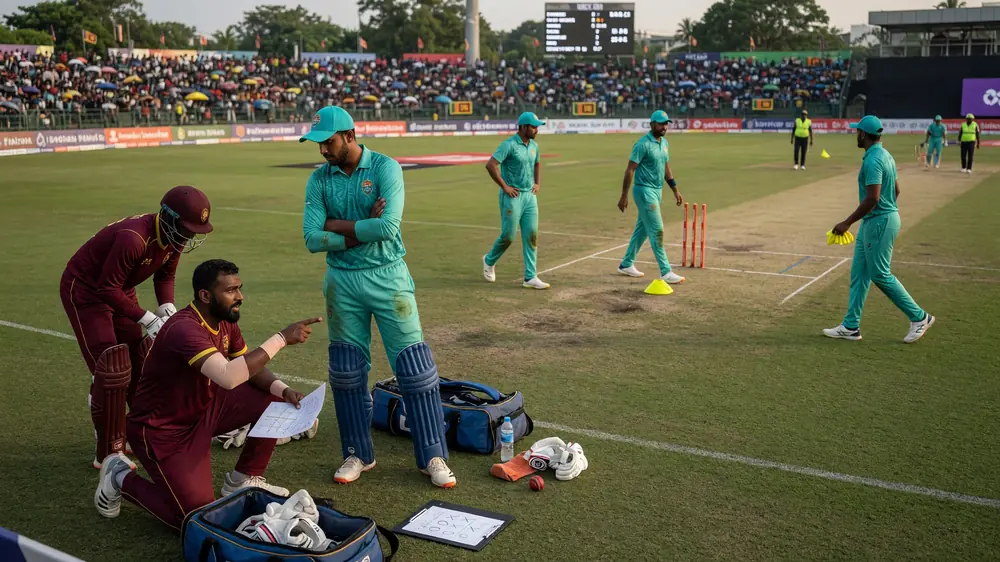
Fantasy bowling points track overs and wickets more cleanly than batting points track “reputation.” On a surface tipped to help slow bowlers later, the first filter is simple: who is scheduled for three-plus overs? Wellalage, Chawla, Mujeeb, Kamindu Mendis (if used as a bowling all-rounder) and any specialist left-arm orthodox should be marked before you spend leftover salary on a fourth seamer.
New-ball seam still matters. Lizaad Williams and Dilshan Madushanka for Jaffna, Binura Fernando and Hasan Mahmud for Colombo, are the names most often attached to early movement and hard lengths. Uneven bounce can produce top edges even when lateral movement is modest. That supports a 1–2 seamer core rather than a zero-pace build. Where managers go wrong is stacking three quicks who share the same powerplay overs and then starve spin for the middle eight.
Death overs remain a coin flip until bowling orders settle. Wiese and Neesham can absorb those overs; so can a specialist if the captain protects a spinner from a left-right pair. If you need a single unique bowler in large contests, a lower-owned spinner confirmed in the XI usually beats a third famous seamer who might bowl only two overs.
Sample construction logic for common contest types
Small leagues (risk-controlled)
Build around Mendis or Fernando, lock Wellalage, add one Colombo two-way piece (Liyanage or Neesham), then fill bowling with one confirmed spinner and one new-ball seamer from opposite teams. Keep one flex seat for the toss. Captain Wellalage only when you trust his batting slot; otherwise captain the keeper-batter and vice the all-rounder.
Mega contests (ownership breaks)
Mirror the public spine at 60–70 percent of your portfolio, then break with one of: a Colombo-heavy bowling bag if Jaffna’s top three is over-owned; a Jaffna lower-order hitter if Colombo’s attack is short of a fifth bowler; or captaincy on Liyanage/Neesham in a thin slice of teams. Avoid five unique names at once—rank volatility rises faster than upside when the base is wrong.
Single-entry specials
Pick a toss-responsive narrative and stay consistent. Example narrative A: Kings chase, spin dominates, Wellalage + Chawla + Mendis core. Narrative B: Kaps defend with Mujeeb and Mahmud, Fernando underperforms after early seam. Do not mix both stories in one eleven.
Match-up notes the source projection quietly supports
Jaffna are described as carrying a slightly weaker top order than Colombo while holding more wicket-taking variety. That split is useful even if you reject the outright “Kings to win” lean. It argues for:
- Colombo top-order batting as safer floor pieces
- Jaffna bowling (especially mixed spin-pace) as the cleaner path to wicket hauls
- Captaincy on multi-skill Kings players when you want correlation with a Jaffna win without depending on their openers alone
Conversely, if you are fading the public Kings lean, load Colombo’s batting spine and pair it with one Jaffna bowler who still benefits from any collapse. Correlation works both ways; what fails is random 6–5 splits with no story connecting wickets and runs.
Checks still open before lock
Several items remain unresolved until official sheets drop. Overseas combinations can push a projected spinner out. Keeping roles for Mishara versus a specialist batter change catcher points. Injury or rotation on Chawla, Mujeeb or Madushanka would rewrite the bowling market in a single graphic. Weather is not currently flagged as a delay risk, but afternoon storms in central Sri Lanka can still arrive without long lead time—monitor local updates inside the final hour.
Also verify platform-specific credits: some fantasy apps weight economy differently, some award bonus points for stumpings that make Mendis’s keeper role more valuable than a pure batter at the same salary. Align the player to the scoring rules you are actually playing, not to a generic template copied from another app.
What to watch next
The decisive next development is the official toss and confirmed team sheets released in the final window before the 3:00 PM IST start at Rangiri Dambulla International Stadium. That announcement settles the remaining selection questions that still block a locked fantasy XI: whether Kamil Mishara keeps and bats high for Jaffna or yields the gloves; whether Shakib Al Hasan and Piyush Chawla are both named and how their overs split; whether Colombo pairs Mujeeb Ur Rahman with Hasan Mahmud; and whether James Neesham and David Wiese are carded for full bowling spells rather than part-time cameos. Managers should leave three contest slots open until that graphic is public, then finalise captaincy and bowling correlation against the confirmed XI—not against pre-match projections.
Match timing, form lines, weather and pitch remarks, and circulated projected combinations referenced in the report draw on Khel Now’s 22 July 2026 LPL preview by Karan Rawat. Contest-construction analysis is independent editorial work. 18+ only. Play responsibly.